

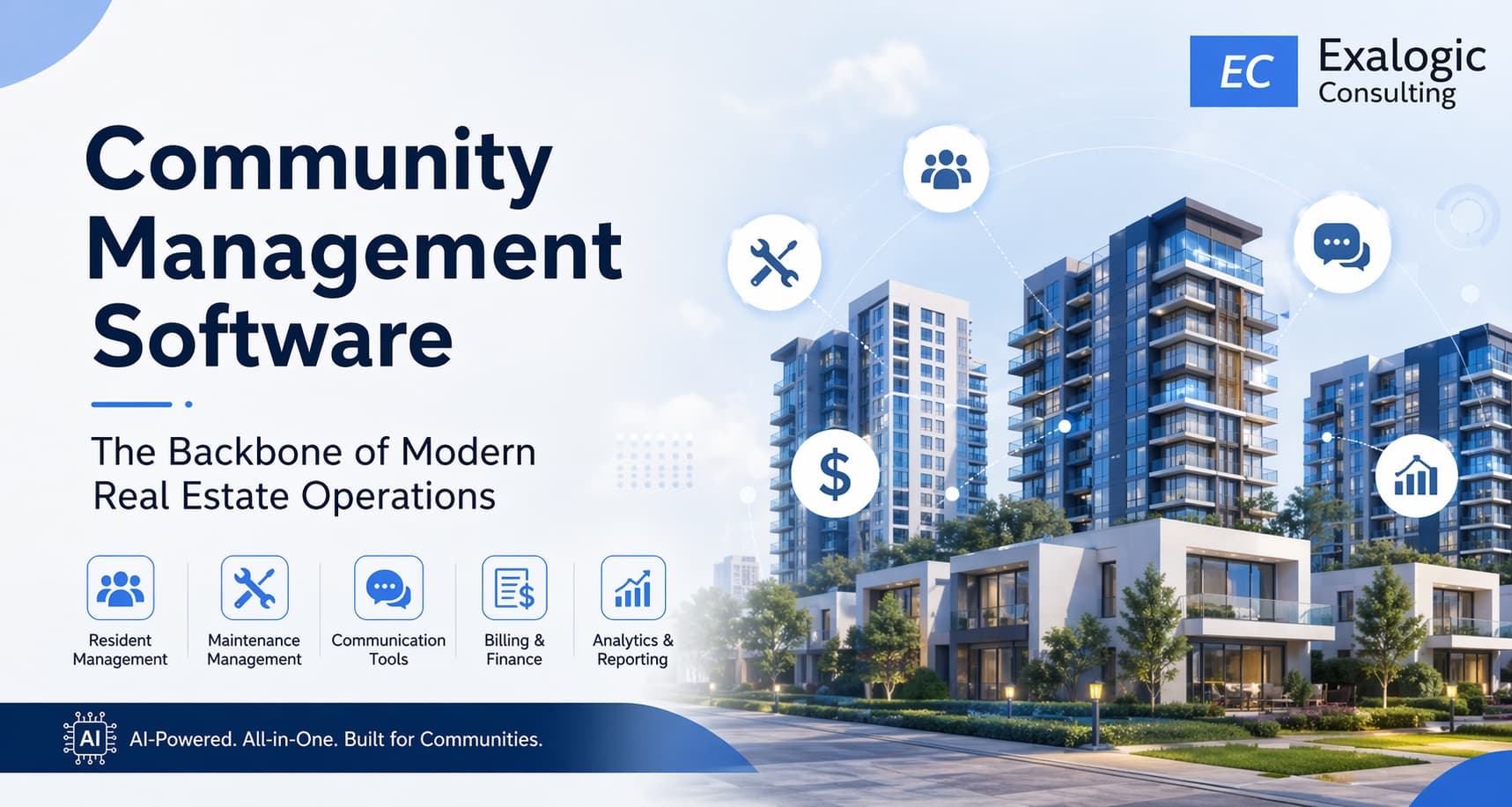
The real estate industry is evolving faster than ever, and traditional methods of managing properties, sales, customer relationships, and financial operations are no longer enough to keep up with modern business demands. Real estate companies today require smarter, faster, and more connected systems to manage growing operations efficiently. This is where real estate ERP software is changing the game.
Platforms like RealCube are helping real estate developers, brokers, and property management companies simplify complex workflows through automation, centralized data management, and intelligent business insights.
What is Real Estate ERP Software?
Real estate ERP (Enterprise Resource Planning) software is an integrated platform designed specifically for the real estate industry. It combines multiple business operations into one centralized system, including:
- Property management
- Customer relationship management (CRM)
- Lead management
- Sales tracking
- Finance and accounting
- Inventory management
- Payment tracking
- Customer support
- Reporting and analytics
Instead of using separate tools for each department, ERP software allows businesses to manage everything from a single dashboard.
Why Traditional Property Management Systems Are No Longer Enough
Many real estate businesses still rely on spreadsheets, disconnected software, and manual processes. While these methods may work for small-scale operations, they often create major challenges as businesses grow.
Common issues include:
- Data duplication
- Delayed reporting
- Poor lead tracking
- Miscommunication between teams
- Manual financial calculations
- Lack of real-time business insights
- Difficulty managing customer interactions
These inefficiencies can directly impact sales, operational productivity, and customer satisfaction.
How Real Estate ERP Software Improves Business Operations
1. Centralized Property and Customer Data
One of the biggest advantages of ERP software is centralized data management. Real estate businesses can store all property details, customer information, sales records, payment history, and documentation in one secure location.
This helps teams:
- Access information instantly
- Reduce manual errors
- Improve communication
- Make faster decisions
With centralized access, sales teams, finance departments, and management teams can work more efficiently together.
2. Smarter Lead and CRM Management
Managing leads effectively is critical for real estate companies. ERP platforms help businesses capture, organize, and track leads automatically from multiple channels such as websites, social media campaigns, property portals, and digital ads.
Advanced CRM features help businesses:
- Track customer interactions
- Automate follow-ups
- Monitor sales pipelines
- Improve lead conversion rates
- Personalize communication
This ensures no potential customer is missed during the sales process.
3. Automated Financial Management
Financial management is one of the most time-consuming aspects of real estate operations. ERP software simplifies this process through automated accounting and finance tools.
Businesses can:
- Generate invoices automatically
- Track payment schedules
- Monitor project profitability
- Manage commissions
- Analyze cash flow
- Reduce accounting errors
Automation improves financial transparency and saves valuable time for finance teams.
4. Real-Time Reporting and Analytics
Modern real estate businesses need data-driven insights to make strategic decisions. ERP platforms provide real-time dashboards and customizable reports that help management monitor performance instantly.
Key insights may include:
- Sales performance
- Lead conversion rates
- Revenue tracking
- Property inventory status
- Payment collection reports
- Customer engagement metrics
These insights help businesses identify opportunities and improve operational efficiency.
5. Improved Customer Experience
Today’s customers expect faster communication, transparency, and better service. Real estate ERP software helps businesses deliver a smoother customer experience by streamlining interactions across every stage of the customer journey.
Features like automated notifications, digital documentation, customer portals, and quick support systems improve customer satisfaction and trust.
Why Cloud-Based ERP Solutions Are Growing Rapidly
Cloud-based ERP systems are becoming increasingly popular because they offer:
- Remote accessibility
- Better scalability
- Lower infrastructure costs
- Secure data storage
- Automatic updates
- Improved collaboration between teams
This flexibility allows businesses to manage operations from anywhere while maintaining data security and business continuity.
The Future of Real Estate Management
As technology continues to evolve, real estate ERP systems are expected to integrate more advanced capabilities such as:
- Artificial intelligence (AI)
- Predictive analytics
- Smart automation
- AI-driven customer support
- Advanced property insights
- Mobile-first management systems
Companies that adopt digital transformation early will gain a strong competitive advantage in the real estate market.
Final Thoughts
The real estate industry is moving toward smarter, technology-driven operations, and ERP software is becoming an essential part of that transformation. Businesses that continue relying on manual processes may struggle to keep up with increasing competition and customer expectations.
Solutions like RealCube help real estate companies streamline operations, improve customer engagement, automate workflows, and make data-driven decisions from a single platform.
As the demand for efficiency, automation, and scalability continues to grow, investing in real estate ERP software is no longer optional — it is becoming a necessity for long-term business success.
| AI-Driven Feature | Traditional Real Estate Process | AI-Driven Platform Advantage | Business Impact |
| Lead Management | |||
Test paragraph